
Mirabelli v. Bonta: SCOTUS Thwarts California Subversion of Parental Rights
Unless there is blatant evidence to the contrary, it should be assumed that parents always have their child’s best interests at the forefront of their decision-making.

By Gavin
Does the state know better for a child than their own parents? This is the question at issue in the recent Supreme Court ruling in Mirabelli v. Bonta. When it comes to the Poe family, one of the plaintiffs in the case, it appears the state believes so.
When the Poe family’s daughter began presenting as a boy in the seventh grade, the parents were not informed by school employees. Despite being referred to at school as an entirely different name with different pronouns, the girl’s parents were never told of this change, and in fact, the school went out of its way to refer to the girl by her birth name around her parents. The school was actively lying to her parents and running parallel identities on this child’s behalf.
It was not until a year later, in the eighth grade, that the parents finally discovered their daughter’s secret identity. This discovery occurred only after hospital staff, not the school, alerted them of their daughter’s gender dysphoria following a suicide attempt. The school system hid her identity from her parents, leaving them clueless as to what was happening until it was almost too late. Just months later, she was admitted back to the hospital for once again being at risk of self-harm.
When she started going to a new school in ninth grade and began presenting as a boy again, her parents were understandably nervous. They asked the school to refer to her only by her birth name and pronouns. However, the school refused, stating that California state law took precedence over the parents’ direct instructions.
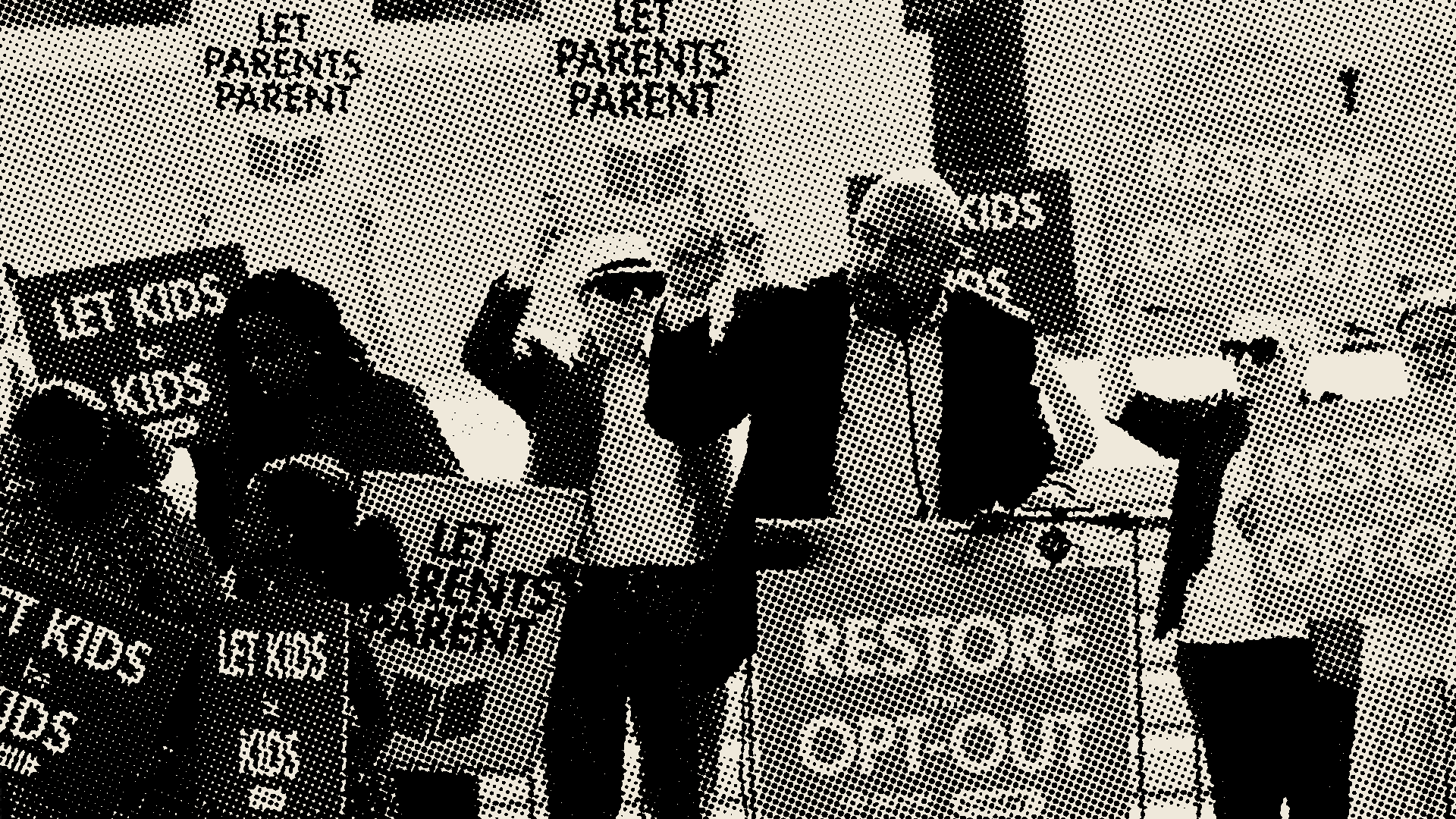
Mirabelli vs Bonta began in 2023 when two teachers filed suit seeking an exemption from their school district’s gender policies, in particular the requirements to refer to a student by their preferred pronouns and names, and to withhold this information from parents unless the student gave consent to disclose it. As the case expanded into a class action, parents, including the Poe family, joined as plaintiffs, bringing the full weight of their experiences to the proceedings.
According to the plaintiffs, these policies violated both the Free Exercise Clause of the First Amendment and the Due Process Clause of the Fourteenth Amendment. The Free Exercise Clause protects individuals from government policies that substantially burden their religious practice, while the Due Process Clause protects the parental right to direct the upbringing of their children. California and the school districts defended the policies by arguing that some students may face hostility, abuse, or rejection at home if their gender identity is disclosed to their parents without consent. In the state’s view, confidentiality policies allow schools to protect vulnerable students.
The district court sided with the plaintiffs, granting summary judgment and issuing a permanent injunction that prevents schools from misleading parents about their child’s gender presentation, requires schools to follow parents’ directions on names and pronouns, and mandates that state-approved materials include notice of these protected rights.
The Ninth Circuit Court of Appeals stayed the injunction pending appeal, putting this parental victory temporarily on hold. The plaintiffs applied to the Supreme Court to vacate the stay, to which Justice Kagan received the application and referred it to the full Court.
On March 2, 2026, the Supreme Court partially granted the application in a per curiam opinion. The stay was vacated with respect to the parent plaintiffs only, and the school could no longer lie to these parents about their child’s gender presentation. At this preliminary stage, the court found that the parents had demonstrated a likelihood of success on the merits of their Free Exercise claim, particularly by relying on Mahmoud v Taylor (2025), which established that school policies that substantially burden religious exercise are subject to strict scrutiny. For the time being, relief for the teachers was denied, meaning they still cannot object to calling a child by preferred pronouns on a religious basis.
While the implications for state law are still going through the Ninth Circuit, these rulings will only affect the families involved in the suit. In an interesting split: Justices Thomas, Alito, and Gorsuch would have granted the full application to both parents and teachers; Justices Barrett, Roberts, and Kavanaugh agreed with the partial split; and Justices Sotomayor, Kagan, and Jackson would have denied the application in full.
In a seven-page dissent, Justices Kagan and Jackson focused heavily on structural and procedural overreach. A strong criticism of Kagan’s is that the Court should not have used its emergency docket to bypass standard legal channels. She says this case “shows, not for the first time, how our emergency docket can malfunction”, believing the court acted with impatience.
Another similar criticism argued in the dissent is that the Court rushed its decision without the rigorous evaluation a case like this deserves. Kagan called their briefing “scant, and, frankly, inadequate”. Additionally, Kagan and Jackson noted that there are nearly 40 similar cases making their way through lower courts, and that because of this, the Court should have allowed the standard appellate process to play out in the lower courts before issuing a sweeping temporary order. This would have allowed the Court to take up the issue at a later date with a more complete record and precedent to go off.
Lastly, they challenged the majority’s application of parental rights under the Fourteenth Amendment. Kagan claims the majority failed to cleanly define the legal boundaries of the doctrine, noting that the Due Process Clause does not explicitly outline parental rights of this nature, making this abrupt policy decision even more legally fragile.
From a right-wing perspective, the primary criticism of the Justices’ dissent is that, despite calling the briefing rushed, scant, inadequate, and hastily prepared, Kagan and Jackson failed to recognize the precedent set by similar cases.
This is the first case of its kind to explicitly discuss gender transition. However, there are already numerous other cases that state parents and legal guardians have the right to direct the upbringing of their children, and, as the ‘primary protectors of children’s best interests’, withholding information from or lying to parents is seen as a serious detriment to the child.
Furthermore, the dissenting Justices overlook a crucial implication of their reasoning: schools could withhold information from parents and lie to them about their children’s medical information. What happens when a child gets an illness, STI, becomes pregnant, or is assaulted, and withholds this information from their parents, and one day at home, the child begins having a medical episode? How are the parents supposed to assist the child when they were never informed that something was wrong? Even if the parents call the school, without the child’s express consent, the school has the right to lie to the parents and not tell them what is going on. What if a child is on drugs and does not consent to the school telling the parents about this? If the child overdoses in class and must go to the ICU, the school would have the right to lie to the parents and withhold potentially life-saving information about the incident that occurred. It goes without saying that a precedent like this would be dangerous, but the question now is: how do so many people overlook this crucial component?
One recurring feature of this debate is that many of the strongest advocates of school confidentiality policies are themselves far removed from the day-to-day responsibilities of parenthood. Despite this, many advocates of these policies speak with a confidence that suggests they understand the needs of children and families as well as, if not better than, the responsibility-bearing parents. Policymakers, activists, and jurists do not have to bear the consequences of decisions affecting children for the rest of their lives. But parents do. This difference in fundamental perspective helps explain why so many parents view policies like these as an intolerable intrusion of parental rights and responsibilities. In that regard, it is noteworthy that Justices Kagan and Sotomayor, two of the Court’s most consistent defenders of the dissenting position in this case, have never raised children themselves. This illustrates the broad divide between those who approach these issues primarily as legal or policy questions far removed from any consequences, and those who experience the consequences personally.
It is concerning that this case had to reach the Supreme Court in the first place. Aside from the obvious moral issues with the state’s position, there is already ample established case law supporting parental rights. The more interesting story from a legal standpoint is the teachers’ argument, as it rests on an entirely different premise and scope than the parents’ argument.
Unless there is blatant evidence to the contrary, it should be assumed that parents always have their child’s best interests at the forefront of their decision-making. This reasoning entails that parents need to be fully informed to make the best decisions for their children, especially regarding medical information. This understanding was common sense within our lifetime. Yet now, as we continue to give credence to the uninformed and morally dubious, we will only continue to see even more absurd cases arise than this one.