
An Appeal to Heaven: The Case for America’s Christian Founding
The argument that America was built intentionally with a bedrock of Christian thought, morals, and culture has only recently become a controversial position.

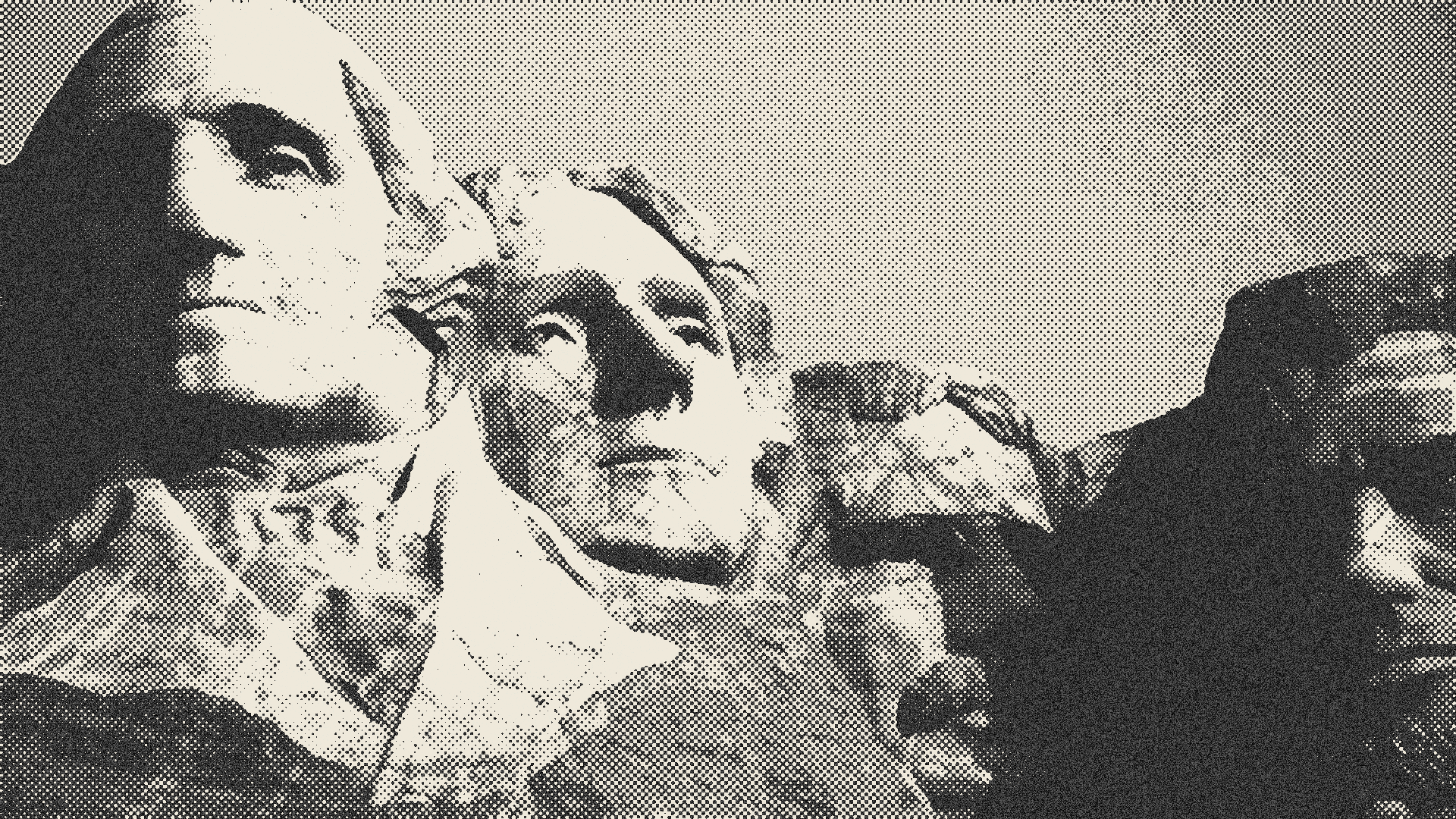
By Brady
I. Introduction
It is difficult to have a serious discussion about the founding of our great nation without addressing Christianity’s role in shaping the ideologies of the Founding Fathers and the character of our government itself. For much of American history, there was a loose consensus that the United States, at a minimum, had Christian roots, if it was not explicitly founded as a Christian nation, and asserting this was fairly uncontroversial. Church of the Holy Trinity v. United States, 143 U.S. 457, 471 (1892). Today, however, this has become a more hotly contested topic. This essay won’t go into great detail about the specific driving forces1 behind this shift in consensus, but to anyone who has been even remotely paying attention to the world around them, it is difficult to ignore the increasing pervasiveness and overtness of our society’s secularization. Sadly, in the 21st century, it is in vogue to peddle the revisionist idea that America was not founded on any religious tradition at all, and use accusation en miroir to suggest that believing otherwise is contrary to reality. An on-the-nose example of this is the Freedom from Religion Foundation (its name itself a ridiculous perversion of the First Amendment), which regularly makes brazen claims such as, “The United States was not founded as a Christian nation,” and “America has never been, and will never be, a Christian nation.”
This secular attitude exists today in many Americans, primarily among those who would identify as left-of-center politically and atheists, but also among Christians who don’t know any better. Some proponents of this attitude have simply absorbed the consensus of the institutions – schools, media, and cultural surroundings generally – without ever taking the time to examine the full historical record. Those that fall in this camp are not dishonest, but rather under-informed, and this writer imagines many Americans, and even Christians, fit this description. But this dogma also has architects and loud defenders, and among those, the pattern is different: pushing recycled talking points without engaging counterevidence, cherry-picking sources, and giving dissenters all sorts of negative labels designed to silence them. This essay primarily seeks to arm Christians with the historical and legal evidence to push back against the false narrative that America was not founded as a Christian nation, and, in the process, to persuade intellectually honest skeptics of this view through the same rigorous evidence and legal-style reasoning. The reality is that America was not only shaped by Christian morals and concepts but also founded on the understanding that it could not long exist without a people that feared God and placed Christ at the center of their lives.
II. The Founders’ Own Words
A. Mayflower Compact
It is important to understand that America’s story does not begin in 1776, but in 1607, when English colonists landed in Virginia and founded Jamestown. There are over 150 years of history and context that are often treated as an afterthought, but should be given immense weight in ascertaining the intent and motivations of the Founders. This period, shaped in part by the Crown, the French, and the Native Americans the colonists encountered, formed the cultural and political inheritance the Founders drew on. To understand their intent, we must understand what they inherited, and the context in which their writings and speeches were made.
Consider the Mayflower Compact, the first governing document of the Plymouth Colony, created in 1620 by the adult male passengers of the Mayflower. About half of the passengers were Separatists (Protestants who separated from the Church of England entirely), while the others (“Strangers”) came to America for non-religious reasons, with no stake in the Separatists’ religious project. When the ship made landfall outside the bounds of the Virginia Company’s charter, a crisis arose: some of the Strangers began to argue that because the ship landed beyond any chartered jurisdiction, they owed the Separatist leadership no obedience at all. This argument meant that colonial government had to be improvised on the spot, before a single colonist set foot on shore.
The colonists elected to remedy this problem by drafting a binding covenant amongst themselves. The final product had just one paragraph yet invoked God or Christianity six times. It opened “In the name of God, Amen” and declared the voyage undertaken “for the Glory of God, and Advancement of the Christian Faith, and Honour of our King and Country.” The signers "covenant[ed] and combine[d]" themselves into a "civil Body Politick" in the presence of God and one another. Facing a crisis, with a fracturing and religiously mixed population, they reached instinctively for a solution with Christ at the center. This set the tone for colonial life for all that came after them.
It is true that the Mayflower Compact has no direct legal connection to the Constitution, but its significance is not its legal effect. It is the earliest surviving evidence of the cultural inheritance the Founders received: a settler tradition that, when forced to answer the most basic political question – “by what authority do we govern ourselves?” – answered that question through the lens of God.
B. Declaration of Independence
After considering the formative years of our Republic, the Declaration of Independence and its explicit grounding in religion should be considered. In 1776, the rhetoric was still the same as the Plymouth colonists’ and was arguably even more explicit about God being the bedrock of the American project.
The Declaration invokes divinity several times and even goes so far as to credit God as the source of all rights. It opens by grounding the colonists’ claim to independence in “the Laws of Nature and of Nature’s God,” implying that God’s laws supersede the laws of King George III. It continues by saying that men are “endowed by their Creator” with unalienable rights. This notion underpins the entire document, stating that the Founders believed rights come from God and the power to protect these rights is granted to the government by the people it governs, meaning no earthly sovereign could revoke these rights.
It is true that the Declaration of Independence does not explicitly mention Jesus or Christianity. However, like any document, it must be understood in the context in which it was written. There were 56 signers of the Declaration, and at least 53 of them were understood to have come from a Christian background.2 The Committee of Five that drafted it were without question referring to the Christian God, because it was the Christian God that they recognized as the one true God. Furthermore, despite what subversives like Alan Dershowitz would have you believe, the vast majority of American colonists in the 1770s were Christians, meaning the Declaration’s signers and anyone else who read the document would have had the same understanding.3 Thus, this history-altering document so important to our country reinforced the assertion made off the coast of Massachusetts – that the structure and foundation of the United States are based on Christian ideals.
C. Northwest Ordinance
The Northwest Ordinance was the legislation passed by the Confederation Congress that established the framework for admitting states from the Northwest Territory (all or parts of Ohio, Indiana, Illinois, Michigan, Minnesota, and Wisconsin). Passed by the Confederation Congress in 1787, Article 3 of the Ordinance declares: “Religion, morality, and knowledge, being necessary to good government and the happiness of mankind, schools and the means of education shall forever be encouraged.” This choice of words was not just rhetorical flourish; it was intentional. Religion was named as a necessary condition of good government, not a private matter incidental to it, and the construction of the sentence implies that the schools should teach religion and morals, as well as matters of knowledge generally. As discussed supra, the specific religion in mind is Protestant Christianity. This is supported by the fact that the three drafters of this legislation were Protestant Christians,4 and two of them were members of the same denomination whose members produced the providential language in the Mayflower Compact, with one drafter being a member of the clergy.
Not only was this Ordinance drafted with references to religion being an important underpinning of America, but it was ratified by the First Congress; the same body that drafted the Establishment Clause. The First Congress re-enacted the Ordinance in 1789 under the new Constitution, and President George Washington signed it. Whatever tension a modern reader perceives between encouraging religion and the Establishment Clause, the Founders evidently did not; they did both in the same session.
The Ordinance also contains a clause that, on its face, appears to cut against the notion that America is a Christian nation, but upon a closer reading actually further supports it: “No person, demeaning himself in a peaceable and orderly manner, shall ever be molested on account of his mode of worship or religious sentiments, in the said territory.” While some may read this as a concession to secularism or plurality of religions, it actually functions as a clarification that all forms of Christian worship would be permitted, in contrast to England’s laws requiring Anglicanism and its traditions to be the only way to express one’s religious beliefs. The founding generation clearly expected the population to be overwhelmingly Christian, but of different denominations, and built a governing framework designed to protect liberty of conscience precisely because the difference at issue was denominational, not religious versus secular, or Christian versus Muslim, for example. Protecting a person’s “mode of worship” presupposes that citizens worship, and, in the context of the demographic of Americans at this time, that they worship Christ. The clause does not anticipate or provide for a religiously neutral public order; it merely expressly encourages variation within a shared religious framework. Read through the correct lens, the Free Exercise Clause and the Ordinance’s encouragement of religion are not in tension. Instead, they reinforce the idea that Christianity is foundational to the country’s operation, and the particular expression thereof is not to be dictated by the federal government.
D. Washington’s Farewell Address
There is no red-blooded American who would deny that George Washington was among the most influential early statesmen, particularly in guiding the young nation toward the course the Founders intended it to follow. Washington was a very uniting figure and was perceived by most of his contemporaries to be immensely trustworthy and wise, so when he penned his farewell address, his countrymen earnestly lent him their ear and took his words to heart.5 He wrote this open letter as a departing steward, offering advice to posterity, not with a personal agenda but with the best interests of the country in mind.
Washington opened his letter by thanking the American citizens, as one would expect of a farewell address. When he did so, he told them: “With slight shades of difference, you have the same religion, manners, habits, and political principles.” Given that tensions between the North and South had already begun (and ultimately culminated in the Civil War decades later), it is likely that Washington was reminding the citizenry of what they had in common, and that they had fought and suffered together in pursuit of the same cause. It is interesting that in doing so, he reminded the Americans that they are a Christian people – while there may be variations in liturgy, interpretation, or tradition, they share core beliefs and a recognition that Jesus Christ is Lord. Not only does this allude to the fact that virtually every American in our country’s early days was a Christian, but it adds further support for the argument that any plurality of religion that was contemplated in the governing documents was merely denominational.
In addition to this remark, Washington went on to state that “religion and morality are indispensable supports” in achieving political prosperity and warned that no one should claim the “tribute of patriotism” while working to undermine these “great pillars of human happiness” and “firmest props of the duties of men and citizens.” In anticipation of critics or subversives claiming that the morality he spoke of can be achieved in the abstract or without Christianity, Washington closed off this argument by stating plainly that “reason and experience both forbid us to expect that national morality can prevail in exclusion of religious principle.” He also explained that education alone has never been sufficient to sustain a nation’s morality and should not be expected to succeed where it always has failed before.
Read alongside the Mayflower Compact and the Declaration, Washington’s Farewell Address is another iteration of the same idea: a people who covenanted in the presence of God at Plymouth, and who grounded their independence in the laws of Nature’s God in 1776, were told by their departing President that this same religious foundation remained indispensable to their survival as a republic. Washington was reminding our nation of the Founders’ intention that Christianity not be merely incidental to American self-government, but its very foundation.
III. The States as the True Locus of Establishment
A. The Establishment Clause
One oft-forgotten fact is that the Founding Fathers and their contemporaries viewed the United States not as a single, indivisible entity as we do today, but rather as a collective of distinct sovereign states joined by a limited federal government for their common defense. While this was obvious for the period when the Articles of Confederation were the supreme law of the land, it was also the case when the Articles were replaced by the Constitution. The view that the states were distinct entities was still held by all, even though the federal government uniting the states was strengthened, and the bond holding them together was therefore tighter. Visible proof of this is evident in the grammar people regularly use when referring to America and in how it has changed. This may seem trivial, but the grammar used by citizens, statesmen, and the Supreme Court should be seen as downstream of a legal theory of sovereignty and therefore indicative of the prevailing attitude toward the nature of the country. For the first 100 or so years after the birth of our nation, people overwhelmingly referred to the United States in the plural – saying “The United States are…” or “subject to their jurisdiction.” This shows that the United States was viewed a union of distinct sovereigns rather than a single indivisible mass. This language began to shift after the Civil War, when the Union’s military victory changed the character of the country by force. Secession had been the states’ ultimate assertion of the plural understanding, that they were sovereigns capable of withdrawing from a compact they had voluntarily joined, and the Union’s successful suppression thereof effectively put an end to it. The grammar did not flip overnight; plural usage persisted in everyday speech, and Supreme Court opinions continued using “United States are” for decades afterward. Over the following half-century, singular usage steadily displaced the plural, tracking the same shift in legal and popular understanding that Texas v. White made explicit in 1869, when the Court declared the Union “indestructible,” and not merely a collection of sovereigns.
This point may seem wholly irrelevant to the essay, but this background information is vital to interpreting relevant Constitutional clauses as intended by the Founders. The plural construction is seen in the Thirteenth Amendment, where slavery was forbidden “within the United States, or any place subject to their jurisdiction,” implying that the amendment applied to each and every state and to any place subject to the jurisdiction of any state. This wasn’t merely a stylistic choice by Senator Trumbull, but rather a conscious, intentional word selection that reflected a settled understanding shared across the political spectrum. This understanding was that final sovereign authority resided in the several states, with the federal government holding only the powers those states had chosen to delegate. It is against this backdrop that the Establishment Clause must be read.
The Establishment Clause of the First Amendment states, “Congress shall make no law respecting an establishment of religion,” and, with the information discussed supra, it is evident that this was not a declaration of national secularism, as some today argue. It should instead be interpreted as a federalism provision, addressed to Congress alone, leaving the question of establishment with the states. England, from which most of the settlers were either from or traced their heritage, had established the Anglican church kingdom-wide, and nonconformity or dissent carried legal penalties such as fines, exclusion from office, or imprisonment. Many of these colonists did not flee the establishment itself, though – rather, they fled the particular establishment that had persecuted them. Massachusetts Puritans, having fled Anglican persecution, hanged Quakers on Boston Common in 1660; and, as discussed in detail below, states established state churches and denominations. Early Americans were not inherently averse to establishing a state religion; they just wanted to stop being persecuted and live amongst like-minded individuals. Justice Story, writing in 1833, described the First Amendment’s object as excluding “all rivalry among Christian sects” and preventing a national ecclesiastical establishment. Further, the Bill of Rights did not bind the states until the Supreme Court applied its guarantees to them through the Fourteenth Amendment, which, for the religion clauses, came in 1940 and 1947 – so for about 150 years, the “restriction” on state establishment that people today assume the First Amendment imposes didn’t exist as a matter of federal constitutional law. Cantwell v. Connecticut, 310 U.S. 296 (1940); Everson v. Bd. of Educ., 330 U.S. 1 (1947). With this in mind, it is clear the Establishment Clause was drafted with the understanding that individual states would be free to choose a denomination for themselves, or none at all.
B. State Constitutions, Established Churches
If there remains any doubt that the Establishment Clause was merely intended as a federalism clause restricting Congress from establishing a national religion, the respective constitutions of the first states further support this assertion. Nine of the first thirteen states’ constitutions imposed a requirement that officeholders be either Christians generally or Protestants specifically to be eligible for office.6 Many early Americans thought that for an oath of office to carry any weight for the person taking it, they must earnestly believe that, by breaking the oath, they would be sinning and might face punishment from God. Having a fear of God would make the oath-taker much more likely to take their oath seriously, whereas a non-believer would be more likely to view it as just another promise made to men that they could potentially break without any punishment. The men drafting the state constitutions were the same men that were simultaneously building the federal structure, so it is without question that these choices were compatible with the federal Constitution and the ideas that served as the foundation of the nation holistically.
Moreover, many of the constitutions adopted by states during and immediately after the Revolution established an official church and funded clergy via taxes, in addition to restricting public office to Christians. The persistence of these establishments and officeholder tests well beyond 1791 is itself powerful evidence against the modern secularist reading of the Establishment Clause. If the Founders had understood the First Amendment as a command that government at every level divorce itself from Christianity, it is inexplicable that the very states ratifying that Amendment continued taxing citizens to support official churches and barring non-Christians from office for decades, or in some cases generations, afterward. Connecticut did not disestablish its Congregationalist church until 1818, twenty-seven years after ratification. New Hampshire held onto its establishment until 1819 and did not remove the Protestant requirement for its governor, senators, and representatives until 1877, eighty-six years after the First Amendment took effect. Massachusetts, the last state to maintain an official church, continued to tax its citizens to support Congregationalist teachers until 1833 and did not remove its constitutional requirement that officeholders “believe the Christian religion” until 1821. Maryland’s requirement of “a declaration of a belief in the Christian religion” was not amended until 1826, and even then, only to substitute a lesser theistic oath for Jewish officeholders specifically, not to abolish a religious test entirely.
More tellingly still, several of these provisions were not ended by the deliberative process of legislatures, but by federal judges more than a century and a half after the founding. Maryland’s requirement that a notary public declare belief in God was not struck down until the Supreme Court’s 1961 decision in Torcaso v. Watkins, an astounding 170 years after the First Amendment’s ratification. North Carolina’s constitution, remarkably, still contains language disqualifying from office any person who denies “the being of Almighty God,” though this language was rendered unenforceable only by Torcaso. This history produces two vital revelations. First, it confirms that the Founders never understood the First Amendment to impose the sweeping secularism that is so often read into it today. If they had, these provisions could not have survived for so long. Second, it shows that the eventual end of these establishments and religious tests came not from a rediscovery of what the First Amendment always meant, but from the twentieth-century doctrine of incorporation, a judicial innovation applying the Bill of Rights against the states through the Fourteenth Amendment, an amendment that did not exist until 1868 and a doctrine that did not exist in its modern form until decades after that. Whatever one thinks of incorporation as a matter of constitutional law, it cannot be mistaken for the original public meaning of the Establishment Clause, and its late arrival is itself the clearest possible proof of how differently the founding generation understood the relationship between Christianity and American government.
IV. Early American Legal Thought
A. Blackstone’s Commentaries
Sir William Blackstone, the famous English jurist, published a manuscript titled Commentaries on the Laws of England in the 1760’s that would prove to be one of the most influential works regarding the legal tradition of the United States. As most are aware, the American legal system is based on English common law, and this treatise provided guidance to many of the Founders. John Adams described it as the “chief source of legal instruction” for the American bar, and James Wilson, a signer of both the Declaration and the Constitution, lectured from it directly. In Commentaries, Blackstone grounded all law in a hierarchy that begins with God. “This law of nature,” he wrote, “being coeval with mankind, and dictated by God himself, is of course superior in obligation to any other. It is binding over all the globe, in all countries, and at all times: no human laws are of any validity, if contrary to this.” The treatise asserted that the laws of man must be consistent with the Christian Bible and the teachings of Jesus Christ, and the Founders knew that this principle must be inextricably intertwined in America’s legal system.
It is important to note the caveat that Blackstone wrote for a monarchy with an established kingdom-wide church, and nothing in Commentaries commits the American founders to that specific institutional arrangement. However, the Founders’ reliance on Blackstone’s work is indicative that they, too, considered Christian revelation a load-bearing wall in the structure of law generally, and therefore in the law of the United States. When the Founders spoke of natural rights as self-evident, when they invoked “Nature’s God” and “divine Providence” in the Declaration, they were referring back to the concepts laid out in Blackstone’s work.
B. Federalist No. 2
The Federalist Papers were a series of essays drafted by Alexander Hamilton, James Madison, and John Jay to urge Americans to ratify the newly drafted Constitution. As such, they provide valuable insight into the minds of the Founders and the thought underlying the Constitution’s provisions. The second of these essays, Federalist No. 2, was written by John Jay, a diplomat, Founding Father, and the first Chief Justice of the Supreme Court. In it, Jay argues for uniting the country under one federal government rather than splitting it into a confederation of “unsocial, jealous, and alien sovereignties.” In a relevant part, he asserts that “Providence has been pleased to give this one connected country to one united people, a people descended from the same ancestors, speaking the same language, professing the same religion, attached to the same principles of government, very similar in their manners and customs.”
While this obviously should not be taken in the extreme literal sense that every single American shared each of these characteristics, it was rhetoric intended to emphasize that the vast majority were united in most or all of them. Even without considering enslaved Africans, the free population was drawn from various European countries rather than a single stock. Jay was merely naming what he took to be the threads binding a people together closely enough to argue that dividing them would be unnatural. Religion was one of those threads, and on that point, his claim holds up better than the ancestry claim. Anglicans, Congregationalists, Quakers, and Baptists disagreed on a great deal, but none of them would have called themselves anything other than Christian. That was the common ground Jay was pointing to – a shared religious identity specific enough that his audience would recognize it as true of themselves. Jay’s argument was that Providence had given this people a set of things they held in common, including a shared religious sentiment. To split apart a people bound this closely, in his telling, would be to work against the design of Providence itself. Therefore, Jay’s writing supports the idea that America was founded as a Christian nation in two ways: first, because it is another contemporaneous assertion that almost every person in America at this time was a Christian; and second, because it confirms that Christianity was treated as one of the essential bonds holding the American people together, on par with shared language and shared ancestry, rather than as an incidental or private matter of no consequence to the nation’s identity.
C. Church of the Holy Trinity v. United States
While the Supreme Court has at times used novel interpretations of the Constitution to erode our country’s Christian identity, it has also provided dicta supporting the notion that America is a Christian nation.7 The most prevalent example is in Church of the Holy Trinity v. United States, a case decided in 1892. This case concerned the Alien Contract Labor Act of 1885, a law passed in the last week of the Arthur administration that prohibited companies from hiring foreigners for cheap manual labor, in an effort to protect American jobs and wages. The Church of the Holy Trinity in New York City was sued by the federal government for violating this law when they hired an English priest. The Court ruled in favor of the church, holding that while this hire violated the law’s literal terms, preventing it was antithetical to the law’s intent. It reasoned that "a thing may be within the letter of the statute and yet not within the statute, because not within its spirit, nor within the intention of its makers".
While this decision was important to guiding statutory interpretation moving forward, the most notable aspect of this case is the reasoning given in the majority opinion penned by Justice Brewer. In relevant part, Brewer stated:
“If we pass beyond these matters to a view of American life, as expressed by its laws, its business, its customs, and its society, we find everywhere a clear recognition of the same truth. Among other matters, note the following: the form of oath universally prevailing, concluding with an appeal to the Almighty; the custom of opening sessions of all deliberative bodies and most conventions with prayer; the prefatory words of all wills, "In the name of God, amen;" the laws respecting the observance of the Sabbath, with the general cessation of all secular business, and the closing of courts, legislatures, and other similar public assemblies on that day; the churches and church organizations which abound in every city, town, and hamlet; the multitude of charitable organizations existing everywhere under Christian auspices; the gigantic missionary associations, with general support, and aiming to establish Christian missions in every quarter of the globe. These, and many other matters which might be noticed, add a volume of unofficial declarations to the mass of organic utterances that this is a Christian nation. In the face of all these, shall it be believed that a Congress of the United States intended to make it a misdemeanor for a church of this country to contract for the services of a Christian minister residing in another nation?” Church of the Holy Trinity v. United States, 143 U.S. 457, 471 (1892).
Justice Brewer outright stated that the United States of America is a Christian nation. In support of this assertion, he invoked the laws, customs, and traditions of our society and concluded that ruling against the Church would be antithetical to this truth, backing this conclusion with specific examples. The case was decided unanimously, with no concurring opinions offering alternative paths to the same outcome or challenging this claim. Of course, there has been later criticism of the ruling by modern SCOTUS Justices Scalia and Kennedy, but these jurists merely attacked the method of statutory interpretation (essentially using legislative intent to override the plain text of the statute) and did not attack the claim that America is a Christian nation. The quoted paragraph is, of course, merely dicta and not binding on lower courts, but its inclusion and the unanimous backing by the 1892 court are indicative that, in an era when judicial restraint over broad pronouncements was already a recognized norm, the claim was uncontroversial enough to go unchallenged.
V. The Revisionist Narrative
A. Article VI and the No-Religious-Test Clause
While there are plenty of arguments that support the idea that America is a Christian nation, there are many against this idea as well. While some of these arguments have been argued persuasively, they ultimately are not very strong when presented with the full historical record and context underpinning them. The most obvious of these arguments that critics make is that Article VI, Clause 3 provides that “no religious test shall ever be required as a qualification to any office or public trust under the United States.” Opponents of the Christian nation thesis treat this as a direct rejection of a Christian national identity by the Constitution. England’s Test Acts conditioned public office on conformity to the Anglican Church, and, on opponents’ reading, the Framers knew this tradition and abandoned it. A government that will seat a Jew, a Muslim, or an atheist in its highest offices, they argue, cannot be a Christian government. They add that the Convention adopted the clause with little resistance, and that Federalist defenders justified it in the ratifying conventions on grounds of religious liberty.
While this argument appears logically sound on its face, it fails for several reasons. First, as mentioned previously, this clause is limited by its own text and applies only to federal offices, since it is limited to offices “under the United States.” When the Framers intended to bind the states, they did so explicitly, as in the express prohibitions of Article I, Section 10. There is no such language directed at the states in Art. VI, Section 3, and the states remained free to impose religious tests. As previously mentioned, several states did so, and some of these tests outlasted ratification by generations, stricken down only by Supreme Court interpretation in the Civil Rights era. With this in mind, the Constitution’s textual silence on “God” or “Christianity” makes sense given that the Framers deemed the regulation of matters involving religion to not be within the powers of the federal government, but this does not mean that the nation itself was not intended to be Christian in character.
Second, the legislative intent and purpose of the clause was to prevent one sect from capturing federal office, not to secularize the government entirely. In a country where Congregationalists, Anglicans, Quakers, Presbyterians, and Baptists each dominated different states, a federal test would have made one Christian denomination supreme over the rest, which the Founders sought to avoid in the same way they sought to avoid “tyranny of the majority” with regard to political leanings. The companion provision allowing an “Oath or Affirmation” points the same way, because the inclusion of “affirmation” in addition to “oath” was an intentional choice made to accommodate Quakers, whose reading of Scripture gave rise to an objection to oaths.
Finally, the clause is not inconsistent with the idea that America is a Christian nation. The argument being made is that Christianity was the cultural bedrock of the founding, not that the federal government imposed adherence to Christianity as a condition of power, or that Christians were given a legally favored status. Article VI, Clause 3 merely confirms that America’s new national government would not act as a religious gatekeeper in the same way as its British contemporaries. The society it governed was overwhelmingly Christian, and the practices of the same generation confirm this. The First Congress that proposed the First Amendment also reenacted the Northwest Ordinance, which declared that “religion, morality, and knowledge” are necessary to good government, and appointed chaplains to both houses.
B. Treaty of Tripoli, Article 11
Another favorite argument advanced by secularists centers on the Treaty of Tripoli, a 1796 agreement drafted to stop Muslim Barbary pirates from attacking American merchant vessels in the Mediterranean. This treaty explicitly asserts in Article 11 that the government of the United States is “not in any sense founded on the Christian religion.” Opponents of the Christian nation thesis point to this dictum as damning, incontrovertible evidence of exactly what it asserts. Their claim is bolstered by the fact that it was submitted by President Adams, himself a Christian, and ratified unanimously by the Senate. While this seems, on its face, to be proof that America is not a Christian nation, the context surrounding the sentence and its inclusion make it evident that it does not actually refute that America is a fundamentally Christian nation.
First, and most notably, the above-quoted phrase does not appear at all in the original Arabic version of the Treaty, or in the Italian translation – it is only found in the translation by Joel Barlow that was presented to the Senate. The leading scholar on this text was Hunter Miller, a New York lawyer who served as the State Department’s Historical Advisor. In Miller’s words, “the Barlow translation is at best a poor attempt at a paraphrase or summary of the sense of the Arabic; and even as such its defects throughout are obvious and glaring.” Further, Miller explains, “Article 11 of the Barlow translation, with its famous phrase, ‘the government of the United States of America is not in any sense founded on the Christian Religion,’ does not exist at all… the Arabic text which is between Articles 10 and 12 is in form a letter, crude and flamboyant and withal quite unimportant.” It is a complete mystery as to how Article 11 came to be written and regarded as part of the treaty, and it is equally perplexing that it has been continually reprinted and treated as trustworthy given that “evidence of the erroneous character of the Barlow translation has been in the archives of the Department of State since perhaps 1800.” This means that while the Senate ratified Barlow’s text, which included Article 11, it could not have carried the weight that fanatical secularists claim it does. Tripoli never signed a document containing this clause, so it was not a term that was bargained for, or a term that the Muslims demanded be included as an assurance. While the version of the treaty containing the relevant phrase was unanimously ratified, the phrase could not have carried much weight, because if it was important to the treaty, it certainly would have been included in the document signed by Tripoli. It is more plausible that this clause was inserted unilaterally by Barlow, a religious liberal cosmopolitan who believed American civilization would ultimately culminate in the construction of the Third Temple in Jerusalem.8 The Senate’s approval establishes that the language was accepted as part of the treaty presented to it, but it does not establish that the Senate intended to make a comprehensive historical or theological declaration about the founding of the United States. Rather, it is more likely that the Senate “rubber-stamped” the Treaty after determining it was likely to solve the immediate piracy issue.
Second, even if the dubious nature of the clause’s inclusion is ignored, it is not inconsistent with the idea that America is a Christian nation. The clause refers to the “government of the United States,” not the United States itself – a natural reading of the phrase merely refers to the federal government, which, as discussed previously, does not mean that America as a nation was not created to be fundamentally Christian. The record is silent as to whether the inclusion of this phrase into the treaty was debated at all, but if so, it is likely that the Senate would have read it narrowly as a statement about the federal government and an assurance against religious hostility, and not broadly as a statement about the character of the nation and its foundation. Secularists point to the fact that the version of the treaty containing the relevant phrase was unanimously ratified and conclude that it is definitive proof that Christianity had no influence on the creation of our nation. The reality is that this treaty is merely a data point that suggests something everyone already agrees on - that Christians are not given special privileges by our government and adherents to other religions are not treated as second-class citizens by our government. The phrase’s inclusion in the Treaty does not bear on whether America is a Christian nation.
C. Jefferson’s Danbury Letter – Separation of Church and State
A third angle that critics of the Christian nation thesis love to take is leaning on the phrase “separation of church and state.” While this phrase is not found anywhere in the nation’s founding documents, it is undoubtedly a principle that was thoughtfully considered in creating the nation's structure and character. However, it was not intended to have the meaning that it is commonly given today.
On January 1, 1802, President Thomas Jefferson answered an address from the Danbury Baptist Association of Connecticut, a dissenting minority taxed to support the state's Congregational establishment. The Baptists had written to Jefferson complaining that the laws of Connecticut led to their exercise of religion to be treated “as favors granted, and not as inalienable rights.” They conceded in their letter that they were “sensible that the President of the United States is not the National Legislator and also sensible that the national government cannot destroy the laws of each State,” but were hopeful that a response from Jefferson could influence lawmakers in Connecticut and other states.9 In his response, Jefferson essentially told the Association that the First Amendment had built “a wall of separation between Church & State”. Many people assert that the “wall” contemplated by Jefferson is one that prevents religion from influencing government, but this is in error. The wall is a limit on government, preventing Congress from making a law policing a church or aspect of one’s religious beliefs. Nothing in the letter suggests that religious people, churches, arguments, or morals must stay out of politics or governance. Admittedly, if it were up to Jefferson, states like Connecticut would not have an established church; all parties to these communications understood that it was not up to Jefferson or the federal government, as it was the state’s right to establish a church. Furthermore, though Jefferson stated that “religion is a matter which lies solely between Man and his God,” nowhere in his letter did he assert the idea that Christianity was not the cultural bedrock of the nation.
In summation, Jefferson’s letter to the Danbury Baptist Association merely describes the First Amendment’s purpose of barring federal power over religion, leaving the subject to the states and the people. It did not wall the nation’s faith off from its government or public life, and it did not seek to keep religion out of government. Instead, the “wall” prevented the government from overstepping into religion, and any one denomination from gaining a ‘favored nations’ status on the federal level. Therefore, this idea does not carry the weight or meaning that many Americans attribute to it.
D. Deism of Founders
The last major counterargument advanced by opponents of the Christian nation thesis is that since some of the founders were Deists or held heterodox religious beliefs, the country could not have been founded on Christianity.10 The major examples advanced are Thomas Jefferson and Benjamin Franklin. However, one would be very hard-pressed to come up with any examples beyond these two, as the other 54 signers of the Declaration of Independence all subscribed to various denominations of Christianity – most being Episcopalian or Congregationalist, with several other Protestant denominations sprinkled in as well, and Charles Carroll being the lone Catholic.11 As all Christians know, only God truly knows the heart of man, so we can only make educated inferences about the beliefs of the Founders based on their manifestations, writings, and the accounts of their contemporaries. 1 Kings 8:39. With that caveat, historians do not often disagree about the religious beliefs of most Founders, due to circumstantial evidence, such as topics discussed in letters, or direct evidence, such as inclusion on the membership rolls of certain denominations.
While it is not disputed that Jefferson and Franklin rejected the divinity of Christ, and therefore cannot be characterized as Christian, they still held the moral teachings of Christianity in extremely high esteem and valued it as a social good despite rejecting core doctrines of the faith. In a letter to Ezra Stiles, Franklin stated that Christian morality was the best the world had ever seen. He also proposed opening sessions of the Constitutional Convention with prayer, saying God governs in the affairs of men.12 Jefferson also viewed Jesus’ moral teachings as favorable, per a letter to Benjamin Rush, and in another letter addressed to Charles Thomson in 1816 stated that he was a disciple of the doctrines of Jesus. Further, it was his pen that wrote of “Nature’s God” and a Creator in the Declaration. Based on his “Jefferson’s Bible,” which was merely the Christian Bible with portions removed, we can be confident that at least in Jefferson’s mind, he was referring to the same God that his Christian countrymen followed.
All of this is to say that, even though Jefferson and Franklin were heavyweights among their peers and were Deists rather than Christians, this does not suggest that America was not founded on Christianity and its teachings and morals. It is evident that they held a deep respect for Christianity, which shaped their lives and thoughts tremendously; these were just two of the many important men who shaped the character of our nation through their combined visions. While Jefferson and Franklin were some of the most influential figures, they were vastly outnumbered by their Christians peers, and the majority of the citizenry were Christians as well. Thus, to point to the heterodox beliefs of a few men as evidence that America was not founded as a Christian nation is nonsensical.
VI. Conclusion
The argument that America was built intentionally with a bedrock of Christian thought, morals, and culture has only recently become a controversial position. For the vast majority of our nation’s history, an assertion that America was created as a Christian nation would be met with widespread agreement. Critics of this assertion, once few and far between, have become emboldened to attempt rewriting history due to the increasing secularization of our society and the growing consensus that Christianity is bad, or that “Sky Daddy” is merely the imagination of fanatics incapable of reason. The fact of the matter is, even though it would be difficult to extrapolate the conclusion that America is a Christian nation from any singular document or Framer’s intention standing alone, when considered together, there is an obvious pattern in the character and context of America’s founding and growth that points to the inescapable conclusion that Christ and His values are at the root of every aspect of our beloved country. From the Mayflower Compact to the opening of daily legislative sessions with prayer even today, there is overwhelming evidence supporting this conclusion. Even the counterarguments most often cited are weak at best, and in many cases actually provide indirect support for the Christian nation thesis.
Notes
- R. R. Reno does a fantastic job in his book Return of the Strong Gods of discussing the underlying causes, arguing that the aftermath and reaction to World War II has ultimately culminated in the demonization of Christianity and traditional values, with softer concepts like multiculturalism and moral relativism being favored.
- It is not disputed that a couple of the signers were not Christians (most scholars agree that Jefferson and Franklin were Deists, but still believed in the moral teachings of Christianity and the concept of God as the Creator). However, besides those two, the rest were Protestants, besides the lone Catholic (Charles Carroll).
- A figure often cited is that only 17% of colonists were church members at the time of the signing of the Declaration. Mark David Hall succinctly explains why this is incredibly dishonest and the methodology used in the study that produced this figure is deeply flawed.
- Nathan Dane's religion was not clearly documented, but the town in Massachusetts that he was from was overwhelmingly Congregationalist so this is a safe assumption; Rufus King was Anglican; Reverend Manasseh Cutler was a Congregationalist minister.
- As an aside, Ron Chernow in his biography Washington: A Life points out that while most people had a very positive view of Washington, it was not as unanimous as we were all taught in school - he was widely revered by all for his contributions, but faced harsh criticism on his competence and even his integrity by some factions (i.e. Democratic-Republicans) that started to publish political attacks on him, though not on grounds relevant to this essay.
- The count of 9/13 represents the count of new constitutions from the thirteen.
- Everson v. Board of Education (1947), County of Allegheny v. ACLU (1989), and Santa Fe Independent School District v. Doe (2000) are a few of the many examples to choose from supporting this claim. The SFISD case is particularly interesting for two reasons: first, the case was brought by Catholic and Mormon parents of students, and second, while the suit was pending the school held elections to determine whether the prayers should happen at all and who should give them, and after the students voted that the prayers should continue, the Fifth Circuit still struck it down. Thus, it was Christians and Mormons attacking this practice, and the court decided to act contrary to the wishes of the student body.
- Goeztmann (2009), Beyond the Revolution, p. 143.
- As an aside, this further supports the argument that the Establishment Clause is really just a federalism clause.
- Hall, Mark David, "The Myth of the Founders' Deism (Chapter One of Did America Have a Christian Founding?" (2019). Faculty Publications - Department of History and Politics. 98. https://digitalcommons.georgefox.edu/hist_fac/98.
- John Adams comes to mind as one beyond these two; he was a member of a Congregationalist church but at times seemed to reject the Trinity.
- This resolution was not adopted, Franklin's note stated this was due to everyone deeming it ‘unnecessary’ but historians dispute how much to read into that based on other circumstances present.